 Know Your PlaceHeritage Planning and Policy
Know Your PlaceHeritage Planning and Policy
Know Your PlaceHeritage Planning and Policy
Know Your Place acknowledges the Dja Dja Wurrung, Yorta Yorta, Bangerang, Taungurung, and Mumirimina as the Traditional Owners of the lands and waters on which we work. We recognise that sovereignty was never ceded, and we pay our respects to Elders past, present and future, and to the deep, continuous and evolving connection to Country each of these nations holds.
A multi-year archaeological investigation to locate and respectfully reinter human remains displaced during cemetery operations across several decades, restoring dignity to those who deserve it.
A note on sensitivity
This project involves the respectful recovery and reinterment of human remains and represents a significant heritage event for multiple communities, including descendants of those interred, the Chinese goldfields community, and the broader Castlemaine region. Know Your Place is committed to conducting all work with the transparency, care, and respect the circumstances demand.
All fieldwork is conducted under the Heritage Act 2017 (Vic) and the Aboriginal Heritage Act 2006 (Vic).
The Project
In 1994, a police investigation confirmed what some already knew: human remains had been systematically displaced from their original burial locations at Castlemaine Cemetery during decades of cemetery operations. Those remains were never recovered. The investigation identified substantial spoil deposits on the cemetery grounds, and a related off-site location is also under investigation.
The Castlemaine Cemetery Trust has engaged Know Your Place as project manager to address this through a carefully staged, multi-year archaeological investigation, on a pro-bono basis. This project exists because it is the right thing to do. The work is guided by a single purpose: to find these people and return them to rest with the dignity they were denied.
Community-led
This is a community-led project. Archaeology is the tool that serves it. Every decision about how the project proceeds, from research design through to reinterment and memorialisation, is made with the approval of the community it affects.
The People
Castlemaine Cemetery, established in 1852, is one of Victoria's most historically significant goldfields burial grounds. In 1874, it was described in the local press as beautifully maintained, with paths and plantings so carefully tended that no grave could be mistaken for another ("The Castlemaine Cemetery," Mount Alexander Mail, 1874). The people buried in its earliest sections reflect the full diversity of the colonial goldfields community. We know their names. We are working to bring them home.
A significant number of Chinese goldfields community members are buried in the cemetery, many within the disturbed areas. We are actively building relationships with Chinese community organisations and the Golden Dragon Museum to ensure this dimension of the project is handled with appropriate care and guidance.
We are aware of women buried in the disturbed sections whose deaths were the result of serious violence. Their stories were poorly documented at the time. This project is committed to ensuring their dignity and memory are central to the recovery and memorialisation process.
The earliest sections of the cemetery were non-denominational. Anglican, Catholic, Presbyterian, Methodist, Wesleyan, Jewish and non-conformist community members are buried together across Sections A, B and D. We are engaging with all relevant religious communities as the project progresses.
The burial records document people from Campbells Creek, Barkers Creek, Sandy Creek, Tarrangower, Newstead, and many surrounding communities. If your family has a connection to this cemetery, we want to hear from you.
The burial records include many infants and children from the goldfields era, some from families who lost multiple children within the same years. Their presence in the affected sections is a reminder of the full human scale of what this project is recovering.
Many of those displaced have living descendants who do not yet know their family member's grave was disturbed. If you have a connection to a burial in the older sections of this cemetery, we want to hear from you. Your family history matters to this project.
Background
In 1874, Castlemaine Cemetery was described in the local press as one of the prettiest situations on the creek, meticulously planted, carefully managed, a source of community pride. No grave could be mistaken for another ("The Castlemaine Cemetery," Mount Alexander Mail, 1874).
By 1928, the trustees were reported to be practically insolvent, struggling to make ends meet (Castlemaine Mail, 1928). Something was already changing in how the cemetery was managed and what it felt it owed the people in its care.
From at least the 1940s, cemetery management began reusing old burial sections. The practice was identified by the Health Commission in 1963 and the Trust was instructed to cease. In 1981, a formal letter confirmed a verbal instruction had been given in 1963 and demanded written acknowledgement the practice had stopped. There is no evidence it did.
By the time the 1994 police investigation was conducted, hundreds of original burial sites in the D, A, and B compartments had been disturbed. The investigation concluded without charges or systematic recovery.
Chairperson Debra Tranter had been pushing for this history to be addressed for years before the right partners and pathways came together. This project exists because she did not stop asking.
Castlemaine Cemetery established. The earliest sections are non-denominational, reflecting the full diversity of the goldfields community.
The cemetery is described as a source of community pride, beautifully planted and carefully maintained, where no grave could be mistaken for another.
The trustees are reported to be practically insolvent. The institutional culture that sustained the cemetery's early care is beginning to fray.
Health Commission instructs the Trust to cease reusing burial ground. The instruction is verbal, and later correspondence confirms it was not formally actioned.
Formal letter from the Health Commission references the 1963 warning and demands the practice cease immediately.
Police investigation confirms remains displaced into spoil piles. Investigation recommends no charges. No systematic recovery is undertaken.
The Age publishes "Bodies bulldozed and graves resold for decades," bringing the history of the cemetery into public view. The Trust engages Heritage Victoria and the Department of Health.
Know Your Place engaged as project manager on a pro-bono basis. Regulatory relationships, community engagement, and governance established.
Fieldwork commences 26 March. Pedestrian survey of spoil pile extents, resold grave mapping, and documentation of former spoil pile areas within the cemetery grounds.
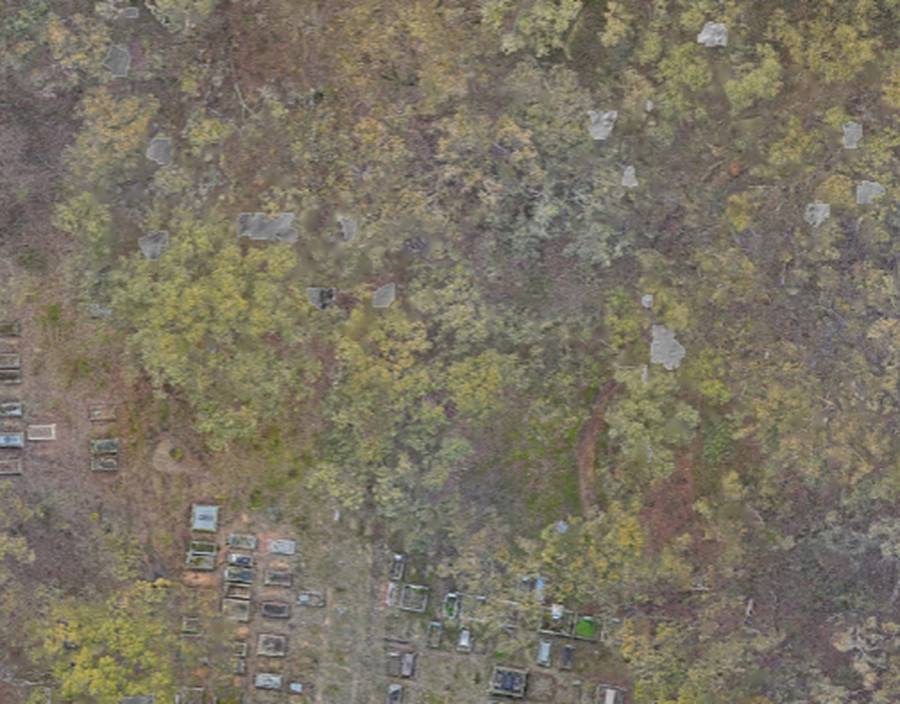
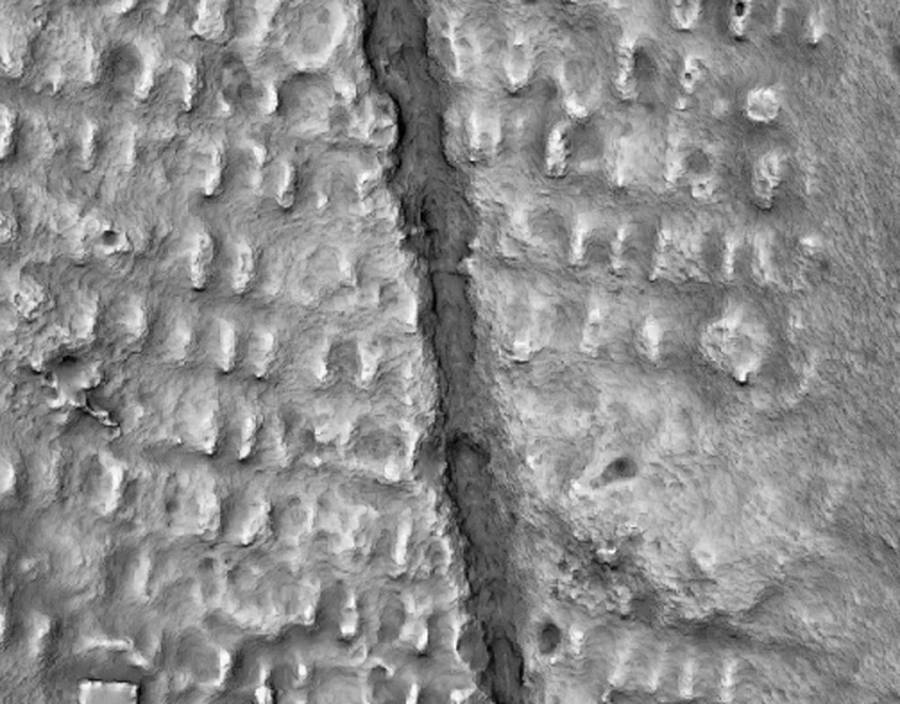
Entangled Landscapes completes a drone LiDAR flight across the site. Every anomaly the data reveals is checked and recorded on the ground, giving the project many more potential grave sites than first expected.
Ground-truthing continues, and historical research formally commences alongside it. The scope of what's beneath the site keeps growing.
Descendants and family research enthusiasts walk the site with us to see the spoil piles firsthand and understand what LiDAR has revealed. A genuinely positive day, and the start of an ongoing conversation with the families connected to this place.
The full extent of piles and areas of interest is documented and mapped. We are preparing the submission to register the site on the Victorian Heritage Inventory, and beginning discussions with the broader team and community about next steps.
From the Field
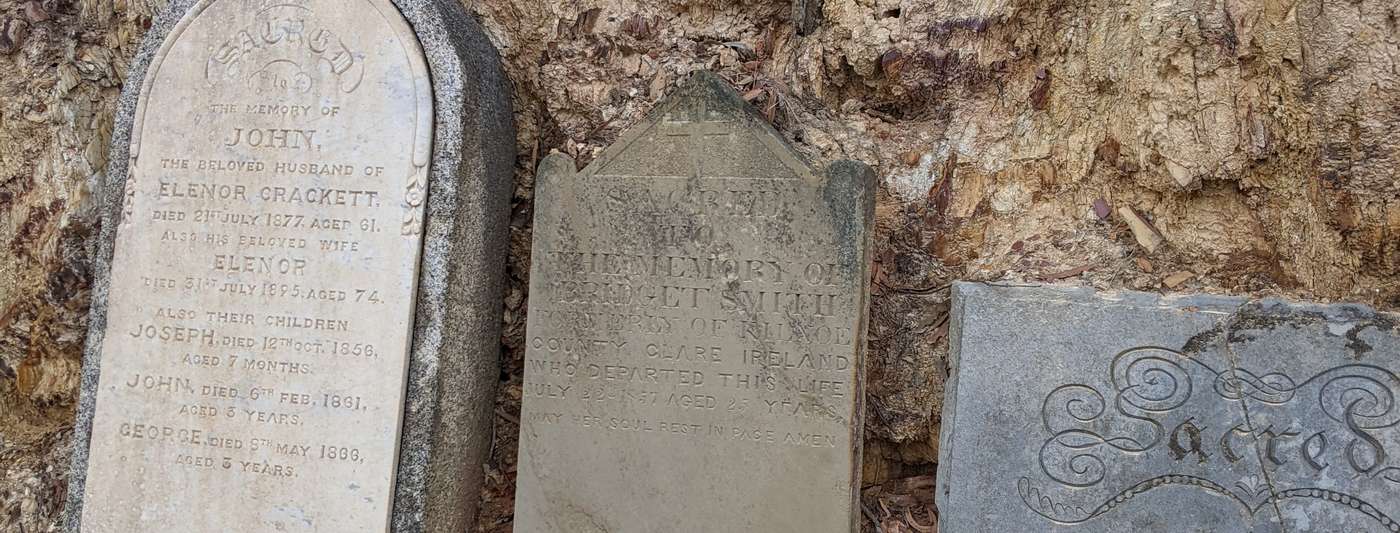
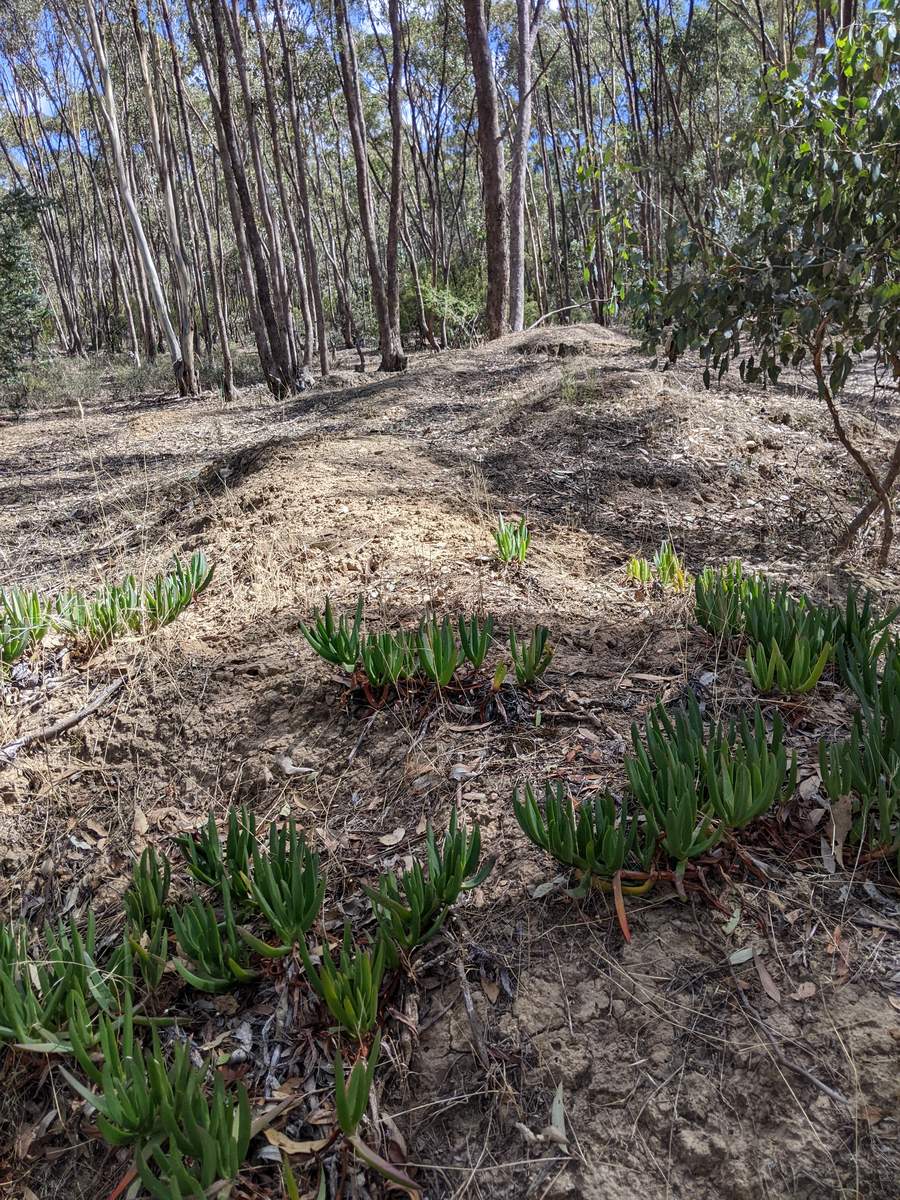
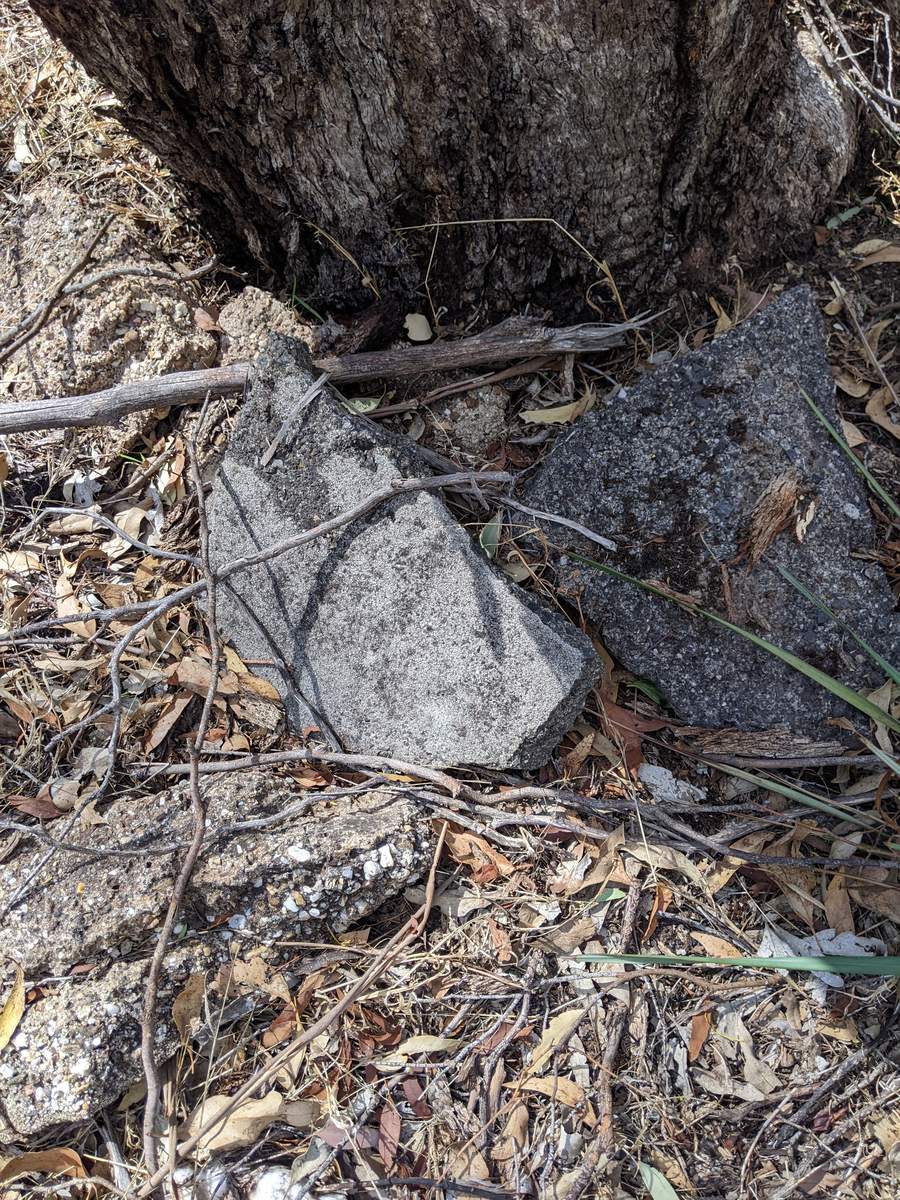
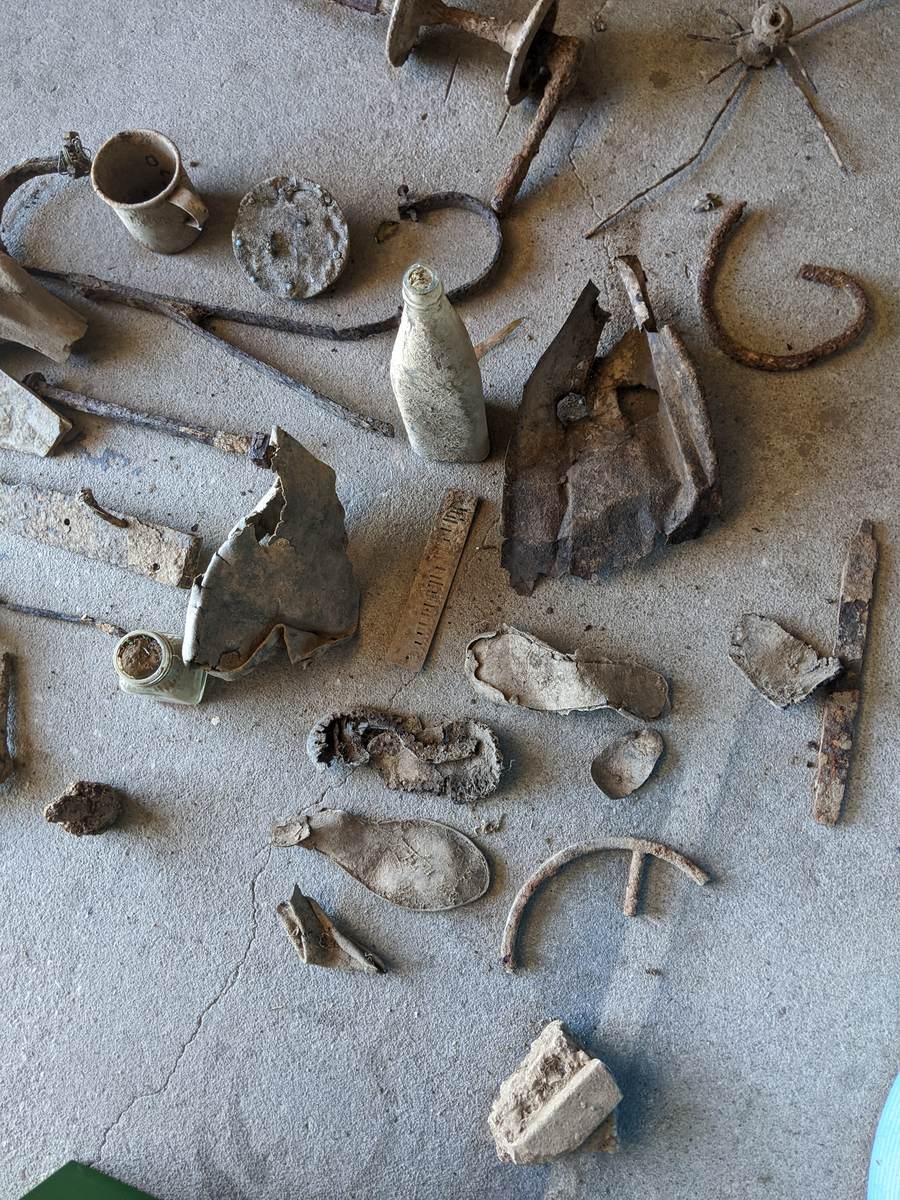
These photographs are from the cemetery grounds and from earlier survey work. They show the scale and nature of what the project is working with. The spoil piles in the bush behind the war memorial are substantial. The headstones lined along the driveway belong to people whose graves were disturbed. The artefacts laid out for recording were surface finds.
Project Stages
The project is structured in six stages, designed to build methodological rigour before any excavation. Each stage informs the next. All ground disturbance requires formal regulatory approval from Heritage Victoria before it proceeds.
GPS recording of spoil pile extents, surface documentation, resold grave mapping, VHI site cards, oral history recording, and burial register analysis. Commenced March 2026.
Active nowDevelopment of a formal ARD, incorporating findings from Stage 1 to design the investigation methodology.
Test pits within the cemetery grounds and at the off-site deposit, to assess the nature and extent of the deposits.
Analysis of test excavation results to determine the scale, composition, and recovery methodology for the broader archaeological programme.
Careful, respectful recovery, osteological documentation, and reinterment of displaced remains. Cultural protocols and community engagement throughout.
Heritage documentation, conservation works, and a memorialisation programme developed with community to acknowledge those recovered.
Our Approach
The history of this site was shaped by concealment. This project operates on the opposite principle. Community, regulatory bodies, and the public will be kept informed at every stage through a staged engagement strategy designed to ensure no one is surprised.
Every decision about methodology, documentation, and reinterment is made with the dignity of those affected as the primary measure. This is not just professional practice. It is the purpose of the work.
Know Your Place works in genuine, open engagement with stakeholders, and affected communities. Regulatory compliance is a floor, not a ceiling. The people in the ground are the reason for every decision made above it.
Know Your Place is managing this project on a pro-bono basis because the community deserves to have this done well regardless of available funding. This is an ethical commitment, not a commercial arrangement.
Join the Team
This project brings together archaeologists, historians, community researchers, and heritage practitioners across its many stages. If you have relevant skills and would like to be involved, we welcome expressions of interest from specialists in historical archaeology, osteology, oral history, archival research, and community engagement.
Get Involved
Community knowledge, oral histories, family stories, things people witnessed or heard about, is a vital part of understanding what occurred and where remains may have been deposited. The official record tells part of the story. The community holds the rest.
Use whichever form feels right. There is no obligation and no question is too small.
Follow the Project
This page will be updated regularly as fieldwork progresses and new information comes to light. You can also follow Know Your Place on Instagram for project updates and field notes. The community information sheet is available to download below.